

Where Craft Meets Innovation
Helping founders and innovators grow their spirits brands, from the first pour to full-scale production and distribution.
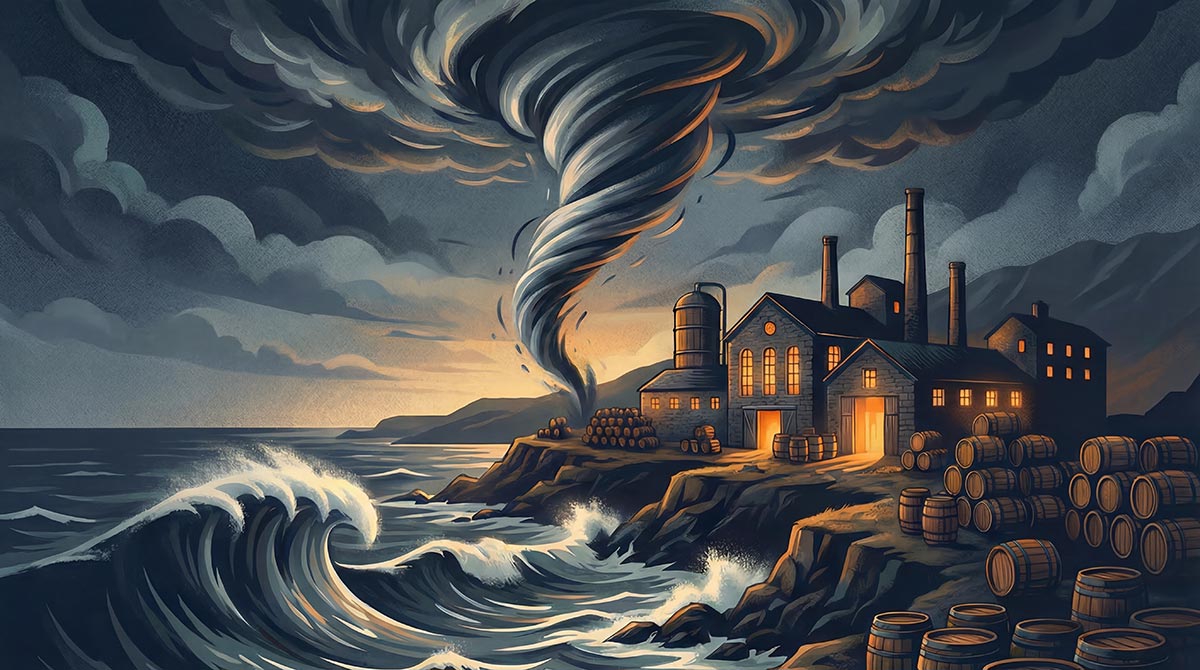
For most of the last decade, the spirits category benefited from a rare combination of tailwinds: premiumization, global expansion, and steady consumer demand. That era is coming to an end.
Today’s pressure is not coming from one place. It is the overlap of four forces that normally arrive one at a time: geopolitics, oversupply, changing consumption behavior, and rising structural costs. Each is manageable on its own. Together, they are forcing distillers, brand owners, and their partners to rethink planning horizons, capital allocation, and what “safe” growth looks like.
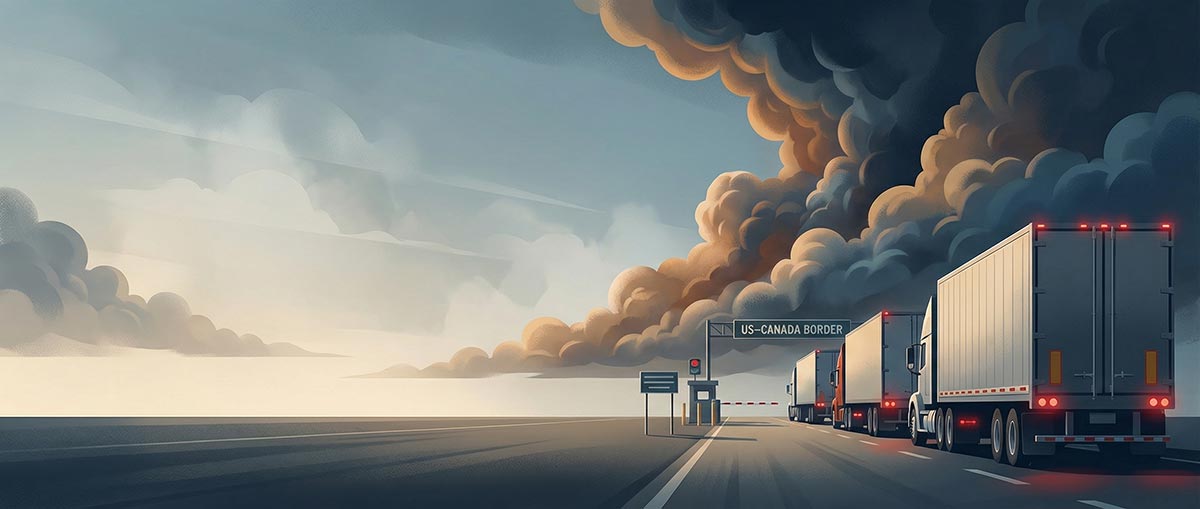
In recent years, alcoholic beverages have repeatedly become leverage in global trade disputes. When governments reach for tariffs, spirits are an easy target: politically symbolic, geographically unique, and tightly regulated.
The real operational problem is not only the tariff rate, it’s the uncertainty. Suppliers cannot plan inventory, pricing, or market strategy when the rules can change mid-cycle and your production cycle is measured in years.
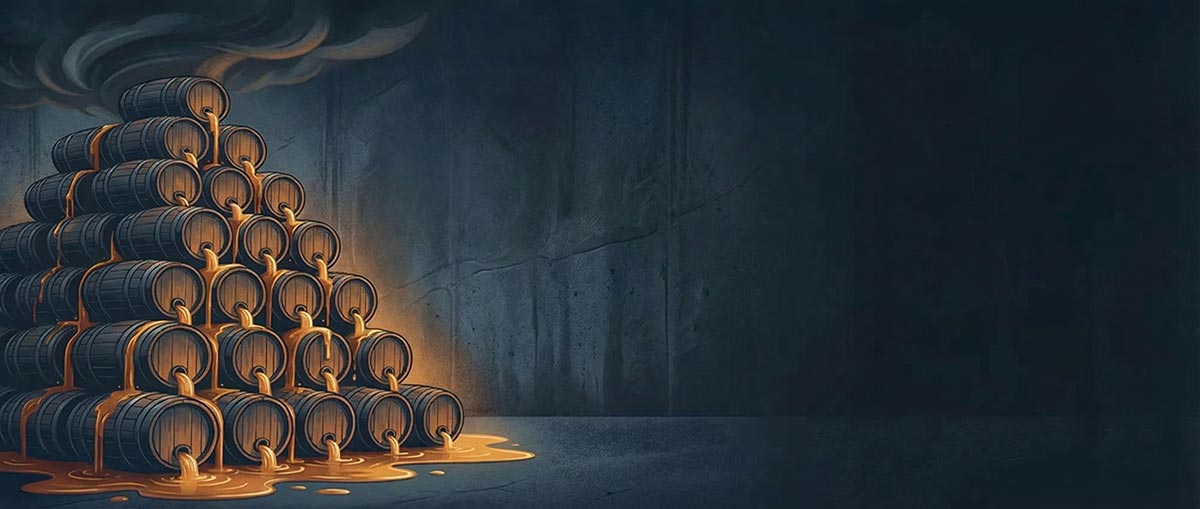
During the COVID-19 pandemic, production ramped up to meet increased demand from a consumer shift away from dining and drinking out. That demand then contracted faster than many forecasts expected. The result is a global overhang that is tying up balance sheets.
Some producers have responded by pausing or scaling back manufacturing. That can be rational in the short term, but it introduces a new risk: if demand swings back, today’s cuts can become tomorrow’s shortage.
In other words, the glut creates a planning trap. Producers want to reduce supply, but brown spirits punish over-correction because the lead time is real.

Alcohol demand is being shaped by more than the economic cycle. Some of the pressure is structural.
Three shifts are worth separating:
Younger consumers are not becoming alcohol buyers when they turn 21 at the same rate prior generations did. Many are choosing alternative beverages or abstaining altogether. This is not a short-term reaction, but a change in baseline behavior.
Less participation at the entry point has downstream effects:
Fewer new consumers entering the category
Slower brand discovery cycles
Reduced long-term loyalty formation
Moderation is no longer niche. It is becoming a default posture, particularly among younger cohorts. In one survey, 53% of U.S. adults agreed that even moderate drinking is harmful, with stronger sentiment among younger consumers. (The Independent, Dec 2025)
GLP-1 adoption adds a second layer to this shift. These medications are altering appetite and cravings, including alcohol consumption, for many users. Analysts have flagged this as a meaningful demand variable because it is both physiological and fast-moving. (Euromonitor, Jun 2025)
Early research has also explored GLP-1s in the context of addiction-related behavior. (Endocrine Society, Oct 2025)
Consumers are not just drinking less. They are becoming more selective about when and what they purchase. Inflationary pressure has reduced discretionary spending power, forcing tradeoffs across categories.
This shows up in more constrained behavior:
Fewer total drinking occasions
Greater price sensitivity at the shelf
Increased competition not just within spirits, but across all discretionary spend
Taken together, these shifts change the structure of demand.
The consumer is not choosing between brands as often.
Occasions are fewer.
Each product has fewer opportunities to earn a place in the rotation.

When tariffs, oversupply, and softer demand hit at the same time, the stress shows up in cash flow, debt capacity, and solvency.
This pressure manifests differently across the industry. Larger producers carry greater absolute exposure through extensive aging inventories, while smaller brands face tighter constraints due to limited access to capital. In both cases, the margin for error narrows.
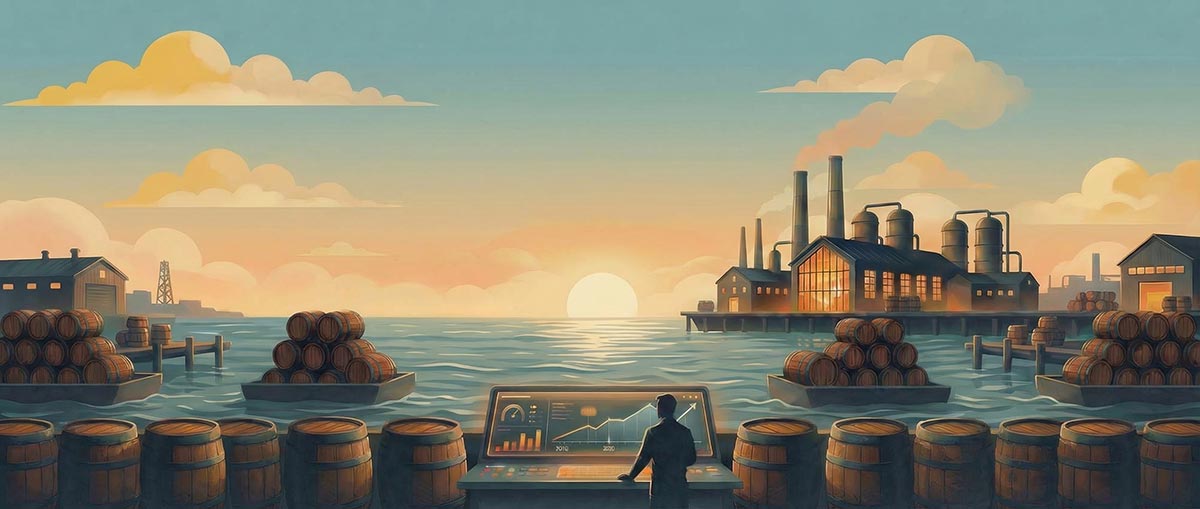
Advanced production methods are emerging in response to these conditions. Approaches such as modernized oak maturation are beginning to change how spirits can be developed, tested, and brought to market. Barrel RM is one example of this broader shift.
These cutting-edge systems are designed for moments like this, when the industry is forced to operate with less certainty and tighter constraints. Instead of relying on static forecasts, they allow teams to model and respond to the variables now driving outcomes:
The pressures outlined above are not isolated events. They are amplified by one structural reality: traditional brown spirits production locks capital into multi-year aging cycles.
When product must sit for four, six, or twelve years before it generates revenue, every external shock becomes more dangerous. Tariffs can close a market mid-cycle. Demand can soften while barrels continue aging. Financing costs can rise while inventory remains illiquid. By the time imbalance is visible in sales data, the production decisions that created it are already years behind.
By eliminating or significantly compressing multi-year aging timelines, these systems shorten the lag between production and revenue realization. Instead of committing capital for years based on static assumptions, producers gain flexibility. Output can be calibrated closer to real demand. Trade disruptions become adjustments rather than structural risks. Working capital is no longer locked into inventory for extended periods.
In practical terms, this leads to:
In a market defined by volatility, agility becomes a form of risk management. Barrel RM enables that agility by collapsing production timelines from years to days, allowing distillers to operate with greater control, capital efficiency, and resilience.
If you are evaluating how to reduce aging exposure, improve capital velocity, or build a more flexible production model, contact Barrel RM to explore how a compressed timeline strategy could fit within your portfolio.
Get in Touch